
The Apostles’ Shields
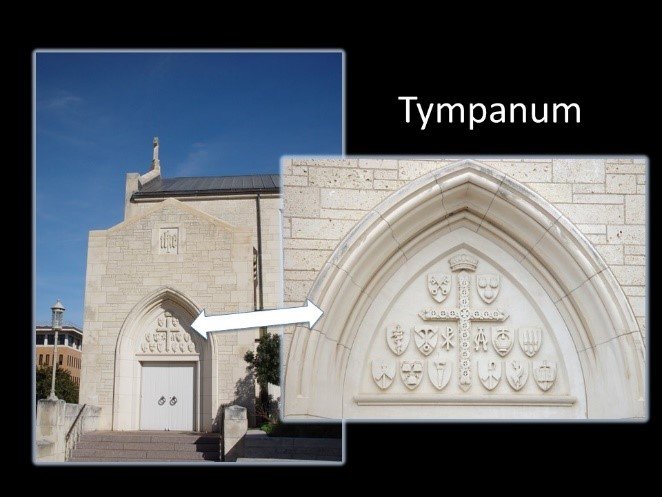
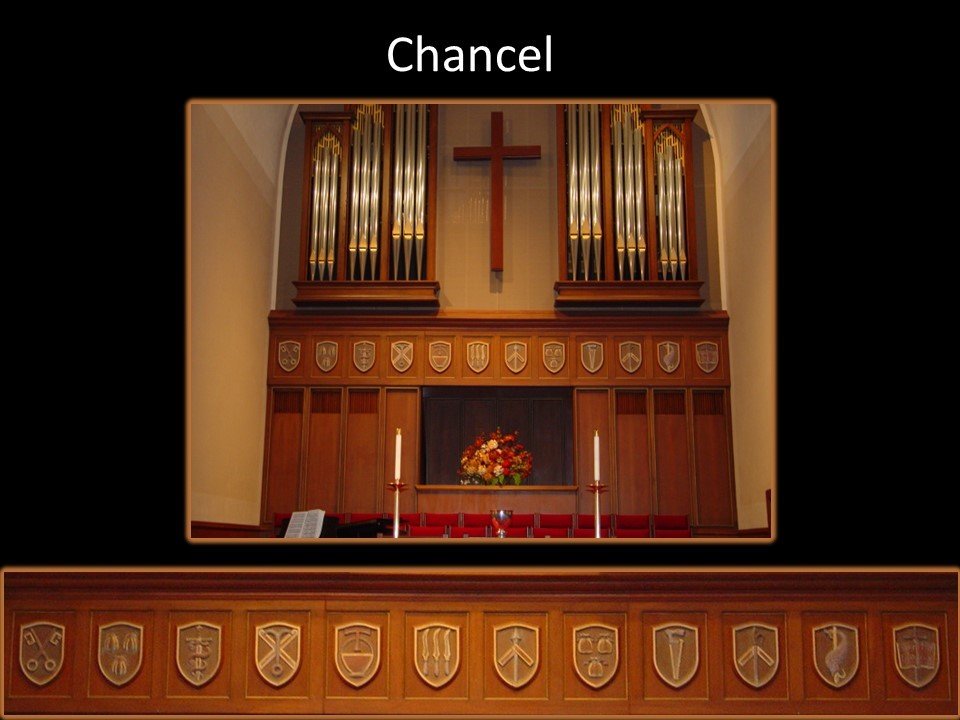
Designed by Charles Umlauf, the Apostles’ Shields appear in two places:
the tympanum above the main entrance to the church and in the chancel in the sanctuary.
The same designs are used for both.

Peter
Two large crossed keys symbolize the keys to the kingdom of heaven, as granted to Peter by Jesus in Matthew 16:19.

James the Greater
Three scallop shells represent pilgrimage and missionary zeal. They are a traditional symbol of the Camino de Santiago (the way of St. James), pointing pilgrims toward the basilica that is said to house James’ remains.

John
The serpent refers to a legend from the 13th century tells about a pagan priest challenging John to drink a poisoned cup of wine to prove God’s power. John drank the wine and was unharmed. The serpent in a chalice represents the triumph of God.

Andrew
The double fishhook represents both Andrew’s occupation as a fisherman and his being called by Jesus to be a fisher of people. The saltire or St. Andrew’s cross (a diagonal X-shaped cross) refers to his death on an X-shaped cross.

Phillip
The basket recalls Philip’s presence at the feeding of the 5,000 and his remark to Jesus in John 6:7. The Tau cross represents Philip’s manner of death as a martyr.

Bartholomew (Nathaniel)
The flaying knives refer to his martyrdom by flaying.
Thomas
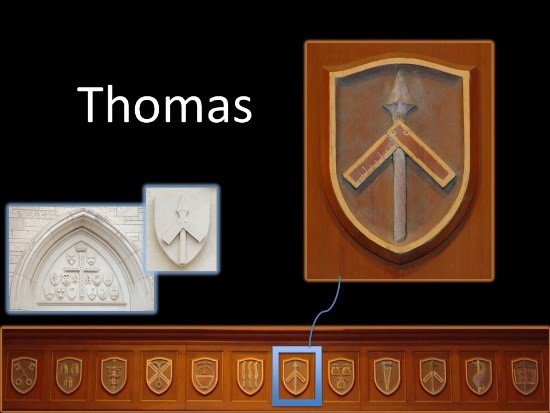
The carpenter’s square symbolizes the church he built in India, and the spear refers to the manner of his death as a martyr.
Matthew
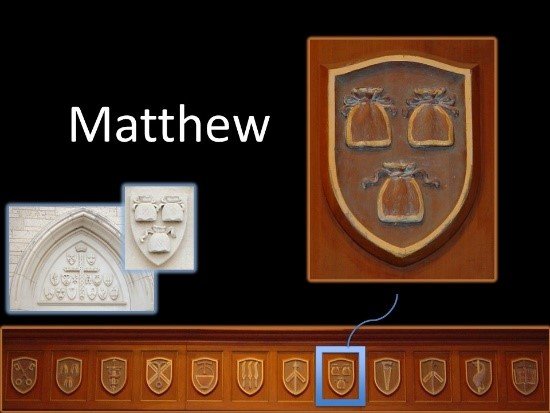
Three purses represent Matthew’s occupation as a tax collector before Jesus called him as a disciple.

James the Less
The saw could represent the ways he contributed to the work of the apostles in building the Church. It is also sometimes mistakenly assigned to James the Less as the instrument of his martyrdom, confusing James with Simon the Zealot.

Jude
The carpenter’s square and boat hook represent his building of churches along his missionary journeys.
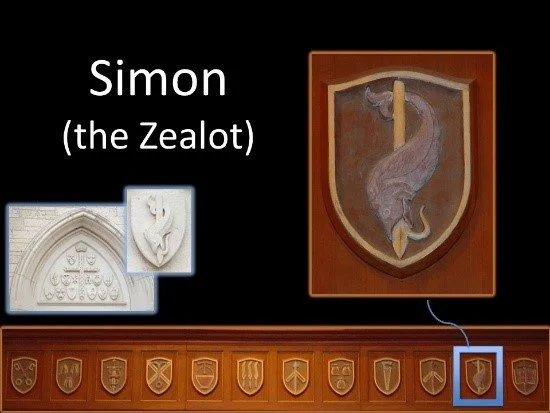
Simon (the Zealot)
The fish and boat hook recall his missionary travels with Jude as a fisher of people.
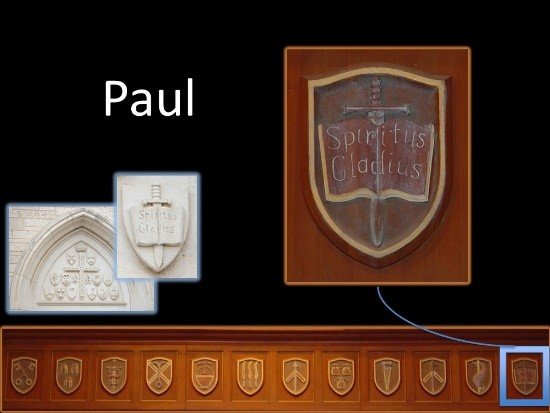
Paul
The open Bible bearing the words Spiritus Gladius (“Sword of the Spirit”) refers to Paul’s own words in Ephesians 6:10-18, in which the Word of God is called the sword of the Spirit.